
Configuration of small workboats and their application in ports
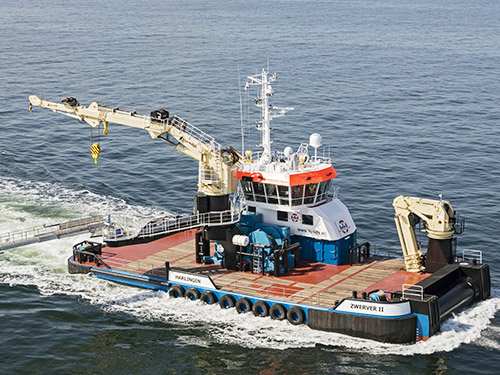
Small work boats,supply boats,mooring boats, anchor boats,towing boats are indispensable "light cavalry" in port operations. They usually refer to vessels with a length of 5 to 30 meters, dedicated to specific operations within the port or near the shore. Their core characteristics include high maneuverability, strong functionality, and compact adaptability. Its configuration is highly adapted to the port environment (such as shallow waters, frequent berthing and unloading, and multi-task switching), and its application covers the entire chain of port operations. The following will be explained from two aspects: the core configuration and typical port applications.
1. Core configuration of the small workboat
The configuration of small workboats needs to balance "operational efficiency", "port adaptability" and "cost control", with the focus on lightweighting of the hull, flexible power supply and specialized design of equipment.
Ship body and structure design
• Material: The main materials are aluminum alloy (the mainstream, lightweight, corrosion-resistant, and easy to maintain) and fiberglass reinforced plastic (FRP) (for high-speed boats and sightseeing workboats). A small number of small boats use steel (such as heavy-duty towing boats). Aluminum alloy boats have a light self-weight (30%-40% lighter than steel), a shallow draft (usually 1-2 meters), and are suitable for shallow waters and narrow channels in ports.
• Ship shape:
• Hovercraft or Semi-hovercraft: The bottom of the vessel is straight or slightly curved. During high-speed operation, part of the hull rises out of the water, making it suitable for rapid transportation within ports (speed range 25-40 knots). Examples include traffic boats and pilot boats.
• Deep-V hull: The bow is sharp, providing excellent stability (resistance to external waves in ports), suitable for towing and emergency operations;
• Double-hulled vessel: The deck area is large , with good stability, making it suitable for carrying heavy equipment or accommodating multiple personnel for operations.
• Flat-bottomed boat: The draft is extremely shallow, suitable for operations in extremely shallow waters such as near docks and beaches .
• Dimensions and Layout: The ship length ranges from 5 to 30 m. Equipment installation positions are reserved on the deck. The bridge has a wide field of vision. The living area is simplified.
2. Power and Propulsion System of the Small work boats,supply boats,mooring boats, anchor boats,towing boats
• Power Source:
• Small boats: Single or double cylinder gasoline engines, low cost and easy to maintain;
• Medium-sized boat: Medium-speed diesel engines (power ranging from 200 to 800 horsepower, such as Yanmar, Volvo), equipped with gearboxes, balancing both torque and fuel consumption;
• Environmental requirements: Electric propulsion or hybrid power .
• Method of advancement:
• Jet propulsion (mainstream high-speed boats): No exposed propellers, anti-tangling (due to numerous floating objects in ports), fast acceleration (0-30 knots can be achieved in only 10-15 seconds), suitable for pilot boats and traffic boats;
• Inboard/outboard engine : Easy to disassemble and assemble, allowing for quick replacement in case of failure. Suitable for multi-tasking (such as temporary cargo transfer boats);
• Full-turn propeller: 360° steering, ability to turn around on the spot, suitable for towing and berthing in narrow port areas ;
• Fixed propeller + diffuser cover (low-speed operation boat): High efficiency, low noise.
• Range and Resupply: The fuel tank capacity ranges from 50 to 500 liters . The electric boat has a range of 2 to 8 hours , and it can be quickly replenished at the fuel and charging facilities at the port.
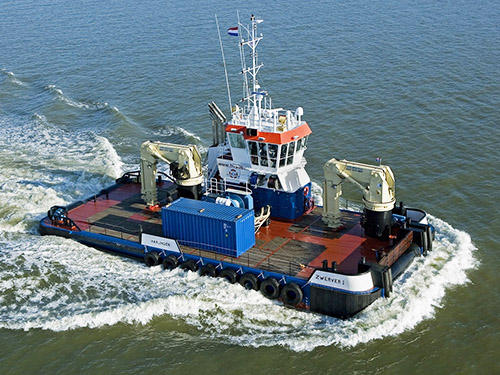
3. Navigation and Communication System of the Small work boats,supply boats,mooring boats, anchor boats,towing boats
• Navigation equipment:
• Basic configuration: Dual-mode GPS or Beidou positioning, electronic nautical chart , magnetic compass/electronic compass ;
• Advanced configuration: LiDAR , depth sounder , AIS onboard terminal .
• Communication equipment: VHF (Very High Frequency) radio station , waterproof handheld walkie-talkie, satellite phone .
• Monitoring and Automation: CCTV cameras (panoramic deck monitoring, collision prevention), power system status dashboard, autonomous driving assistance .
4. Deck and specialized operation equipment on the Small work boats,supply boats,mooring boats, anchor boats,towing boats
The "working characteristics" of small workboats are mainly achieved through deck equipment, and are classified and configured according to common tasks at ports:
Job Type Core Equipment Parameters Examples
Towing/Tugging Towing winch (electric/hydraulic), high-strength towing cable, side thruster Towing force 5-50 tons, retraction and extension speed
Lifting/Transferring Telescopic crane (hydraulic drive), roll-on/roll-off platform, forks/hook Lift capacity 1-10 tons, boom rotation 360°, platform load capacity 5 tons
Cleaning/Maintenance High-pressure water gun (pressure 10-30MPa), garbage collection net/scoop, rust removal and sandblasting equipment, tool cabinet Water gun range 10-20 meters, garbage compartment capacity 0.5-2m³
Emergency/Rescue Life raft , first aid kit, fire pump, oil spill recovery device Skimming efficiency, fire cannon range 30-50 meters
Inspection/Repair Underwater robot (ROV) storage frame, ultrasonic thickness gauge, cable reel ROV maximum diving depth 100-300 meters
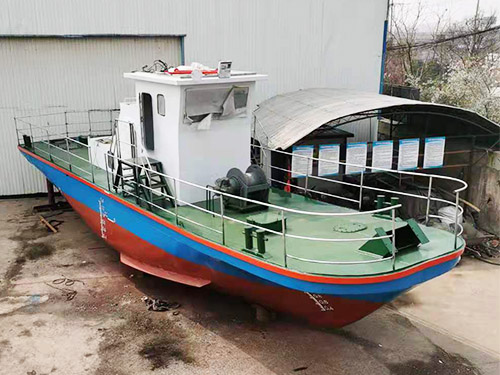
5. Safety and Environmental Protection Features
• Safety equipment: Life jackets, life buoys, fire-fighting system, emergency position-indicating radio beacon , anti-skid decks.
• Environmental protection configuration: Oil-water separator, low-sulfur fuel oil or electric power.
II. Typical Applications of Small Workboats in Ports
The port is the "main battlefield" for small work vessels. Its applications cover four scenarios: vessel entry and exit, facility operation and maintenance, safety assurance, and environmental protection operations. The details are as follows:
Ship berthing and unberthing assistance
Tugboat workboat: Assists large vessels in berthing and unberthing, moving between docks, or provides stern thrust to stabilize the vessel in strong winds or strong currents. Equipped with a full-turn propeller + high-power towing winch (towing force 20-50 tons), such as 10-20 meter steel/aluminum tugboats, commonly found in commercial ports and oil ports.
Pushing vessel: Smaller in size 5-10 m and more maneuverable, it is used on narrow docks to push small vessels, preventing large tugboats from being unable to enter.
2. Navigation and Personnel Transfer of the Small work boats,supply boats,mooring boats, anchor boats,towing boats
• Pilot Vessel: This vessel is used to transport the pilot to and from foreign ships . It is equipped with a high-speed hovercraft/double-hulled vessel, and the deck is equipped with a fixed frame for the pilot's boarding ladder. For example, 12-18-meter aluminum pilot vessels are commonly seen in international commercial ports.
• Vessel Transport Vessel: Short-distance transportation of personnel and spare parts within the port . Mostly 10-15 meters in length, made of fiberglass or aluminum, equipped with simple seats and luggage racks, with a cruising speed of 20-30 knots.
3. Port Facility Maintenance and Operation
• Buoy/Navigation Mark Maintenance Vessel: Perform maintenance on port and channel buoys, equipped with a flat-bottomed boat, with a tool cabinet and spare parts box on the deck, such as an 8-12 meter fiberglass boat.
• Dock facility inspection vessel: Inspect and repair the dock's fenders, mooring posts, and oil transfer arms. Equipped with a catamaran + a boom crane, and carrying welding or cutting equipment, such as a 15-20 meter aluminum catamaran.
Underwater facility inspection vessel: This vessel is used to inspect the corrosion conditions of underwater pipelines and pile foundations with the help of ROV.
4. Transportation of Materials and Equipment
• Dry cargo transfer vessel: The port urgently needs spare parts, containers, equipped with roll-on/roll-off ramps and cargo forks. For example, an 10-15 meter aluminum vessel with a load capacity of 5-10 tons.
• Liquid cargo transfer vessel: Supplies fuel and fresh water to small vessels, equipped with liquid cargo piping system . For example, 8-12 meter stainless steel boats.
5. Emergency Rescue and Environmental Protection
• Rescue Vessel: Involved in rescuing people in distress in port waters, equipped with life rafts, emergency compartments, searchlights, such as 6-10 meter rigid inflatable boats.
• Oil spill recovery vessel: For cleaning up oil spills at the dock, it is equipped with an oil skimmer and an oil containment boom, such as a 10-15-meter steel vessel.
• Fireboat: For extinguishing initial fires on ships or facilities at the dock, it is equipped with a fire pump, such as a 12-18 meter aluminum boat.
6. Port Cleaning and Order Maintenance of the Small work boats,supply boats,mooring boats, anchor boats,towing boats
• Garbage collection vessel: Collect floating garbage in the waterway. Equipped with garbage collection nets and conveyor belts. For example, a 6-10 meter small vessel, it conducts daily round-trip operations.
• Patrol Vessel: Maintain the navigation order of the port (evacuate illegal small boats, persuade away obstructive fishing vessels), equipped with sirens and alarms + VHF radio transceiver. For example, a 8-12 meter fiberglass boat.
III. Development Trends of Small Workboats at Ports
1. Intelligence: Equipped with AI collision avoidance system (automatically identifying the edge of the dock and other vessels), remote control (centralized management by the port dispatch center), reducing reliance on human labor;
2. Greening: Popularization of electrification (such as clean vessels and traffic boats with pure electric drive), pilot hydrogen fuel cell technology (long-range operation vessels);
3. Modularization: The same hull can be adapted for multiple tasks by replacing deck equipment (such as cranes/dragline machines/cleaning devices), reducing procurement costs;
4. Automation: Small unmanned working vessels (USVs) are used for operations in dangerous areas (such as oil spill areas, minefields), remotely controlled via base stations.
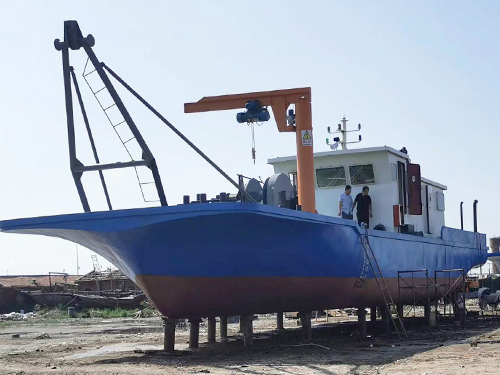
Summary
Small workboats are the "capillaries" for the efficient operation of ports. Their configuration closely aligns with the "port scenarios" (shallow waters, narrow spaces, multiple tasks), focusing on the core concepts of "lightness, speed, and specialization". Their applications cover the entire chain of ship assistance, facility operation and maintenance, and safety guarantees, and are indispensable basic equipment for port modernization. In the future, with the upgrades towards intelligence and greenness, their "flexible operation" capabilities in ports will be further strengthened.